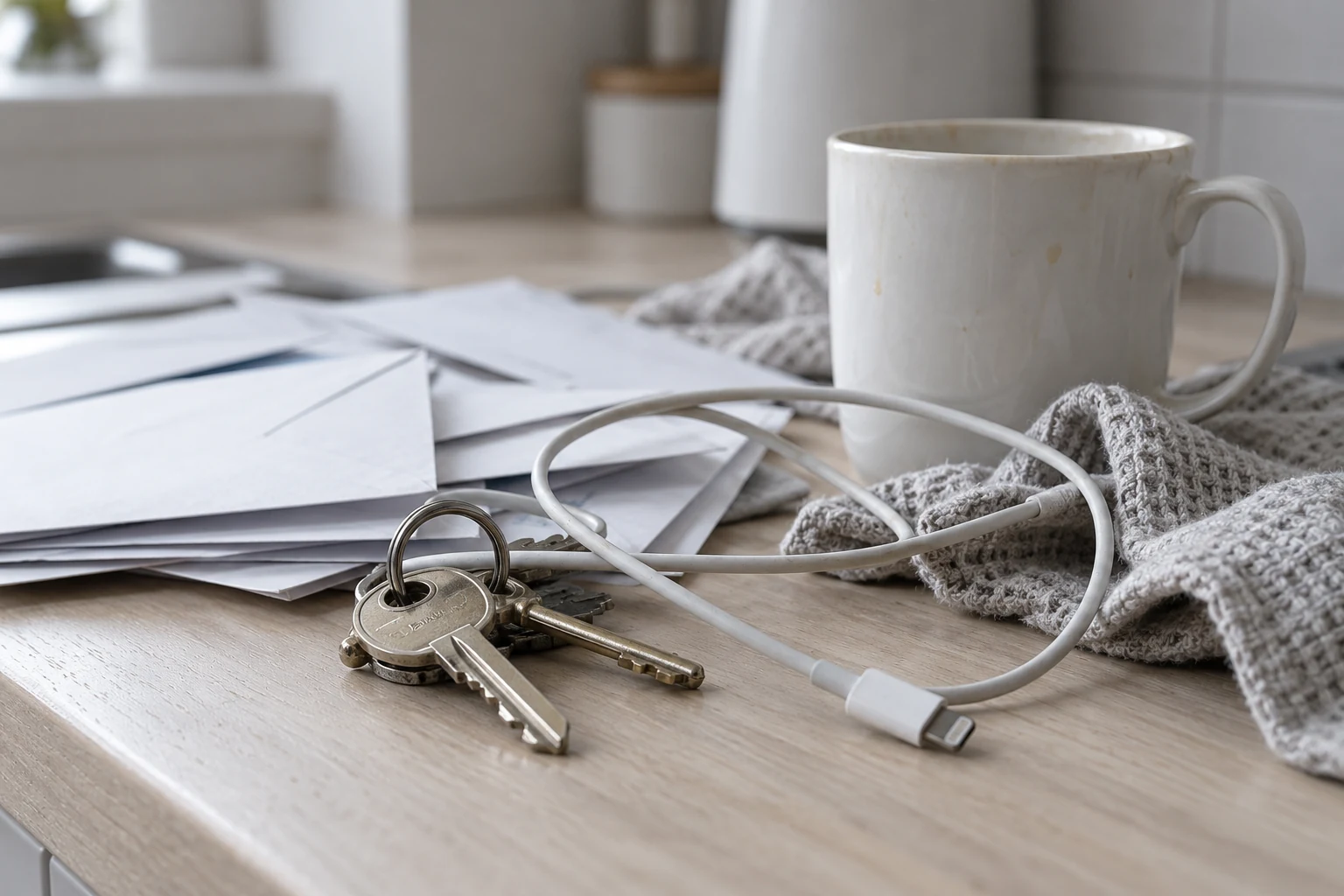
The pile-up moment
ADHD and overwhelm often start with jobs that would take five minutes each. There's a parcel to send back, a dentist to ring, a form on the side and a friend you haven't replied to. None of them is hard. Then you look at all of them together, your chest goes tight, and you end up scrolling on your phone instead of doing any of them, which only makes the pile bigger.
Why small jobs snowball
Every unfinished job takes up a bit of space in your head, even when you're not working on it. With ADHD, planning, starting and finishing tasks can all take more effort, so jobs get left half done and new ones arrive before the old ones are cleared. The NHS page on ADHD in adults lists finding it hard to organise your time and finding it hard to finish tasks among the signs of inattention.
The problem is that the jobs stop feeling separate. Your brain stops seeing a parcel, a phone call and a form and starts seeing one big lump called "everything". You can't start "everything", because it hasn't got a first step. So you avoid it, feel guilty for avoiding it, and the guilt gets added to the pile as well.
What the research shows
Overwhelm isn't a medical term, but parts of it have been studied. A small Swedish study compared 28 adults with ADHD to 28 without and found the ADHD group reported much more everyday stress, and the more everyday stressors people had, the more stressed they felt. A 2014 review of emotion dysregulation in ADHD found that difficulty managing emotions is common in ADHD across all ages and adds a lot to day-to-day problems.
That fits with what a lot of people describe: it's not only the amount of stuff, it's how strongly it hits you and how hard it is to calm down once it has. The NHS also points out that anxiety and depression can make ADHD symptoms worse, so a run of stress can turn a manageable list into something that feels impossible. None of this means everyone with ADHD feels the same way.
The freeze
Overwhelm doesn't always look like panic. Often it looks like nothing at all. You sit on the sofa knowing there are ten things to do and do none of them, or you clean the cooker because it's easier than opening the bank letter. From the outside it can look lazy. From the inside it feels more like your brain has too many tabs open and won't let you click on any of them.
Shrinking the pile
The aim is to turn "everything" back into separate jobs and then make the first one small enough to start. These are practical ideas that people with ADHD often find useful, not treatments, and not every one will suit you. Try one or two the next time the pile-up feeling hits, and keep whatever actually gets you moving.
Count the pile
Get every job out of your head and onto one page, without sorting or tidying, then count them and write the number at the top. "Everything" can't be started, but "eleven things" is a list with an end. It's usually shorter than it felt, and a number gives you something to watch go down, which is far more motivating than a vague sense that you're drowning.
Sort by minutes, not importance
Next to each job, write roughly how long it takes: two minutes, ten minutes or an hour. Then set a timer for fifteen minutes and do as many of the two-minute jobs as you can in one go, like the text, the online form and the bin bag by the door. Clearing four or five small ones quickly takes a surprising amount of weight off and makes the bigger jobs easier to look at.
Start with the job that unblocks others
Some jobs hold up other jobs. You can't send the parcel back until you've printed the label, and you can't book the MOT until you've found the logbook. Look for the one job that clears the way for two or three others and do that first. Clearing it gives you a bit of momentum and makes the pile visibly smaller, even if the job itself is boring.
Calm your body before deciding
When overwhelm hits, it's hard to think clearly about what to do first. Before you look at the list, do something physical for two minutes: stand up, drink a glass of water, open a window or step outside. It sounds too simple to matter, but deciding with a racing heart tends to end in avoidance. Come back once you've moved, then pick just one job from the list.
Box up the paperwork
Loose paper all over the table keeps the overwhelm going, because every envelope asks for your attention every time you walk past. Put all of it in one box or tray, write a day on a sticky note on the front, like "Saturday 10am", and put it in your calendar. The pile is still there, but it's waiting for a set time instead of following you round the house.
Set a finish line for the day
Overwhelm feeds on the idea that you're never done. Decide in advance what counts as a good day, such as two of the jobs on the list, and stop when you get there. Cross things off where you can see them rather than deleting them, so you've got proof of what you've cleared. Ending the day on something finished makes it easier to start tomorrow.
When to get support
If overwhelm is regularly stopping you from working, paying bills or looking after yourself, the NHS advises seeing a GP if ADHD symptoms are affecting your work, studies or relationships. If you're already diagnosed and it's getting harder, talk to your GP or ADHD team. If you're struggling with anxiety or low mood, you can refer yourself to NHS talking therapies in England without seeing a GP first, as long as you're 18 or over and registered with a GP.
This information is for general education and is not personalised medical advice. Treatment and prescribing decisions belong to qualified healthcare professionals.