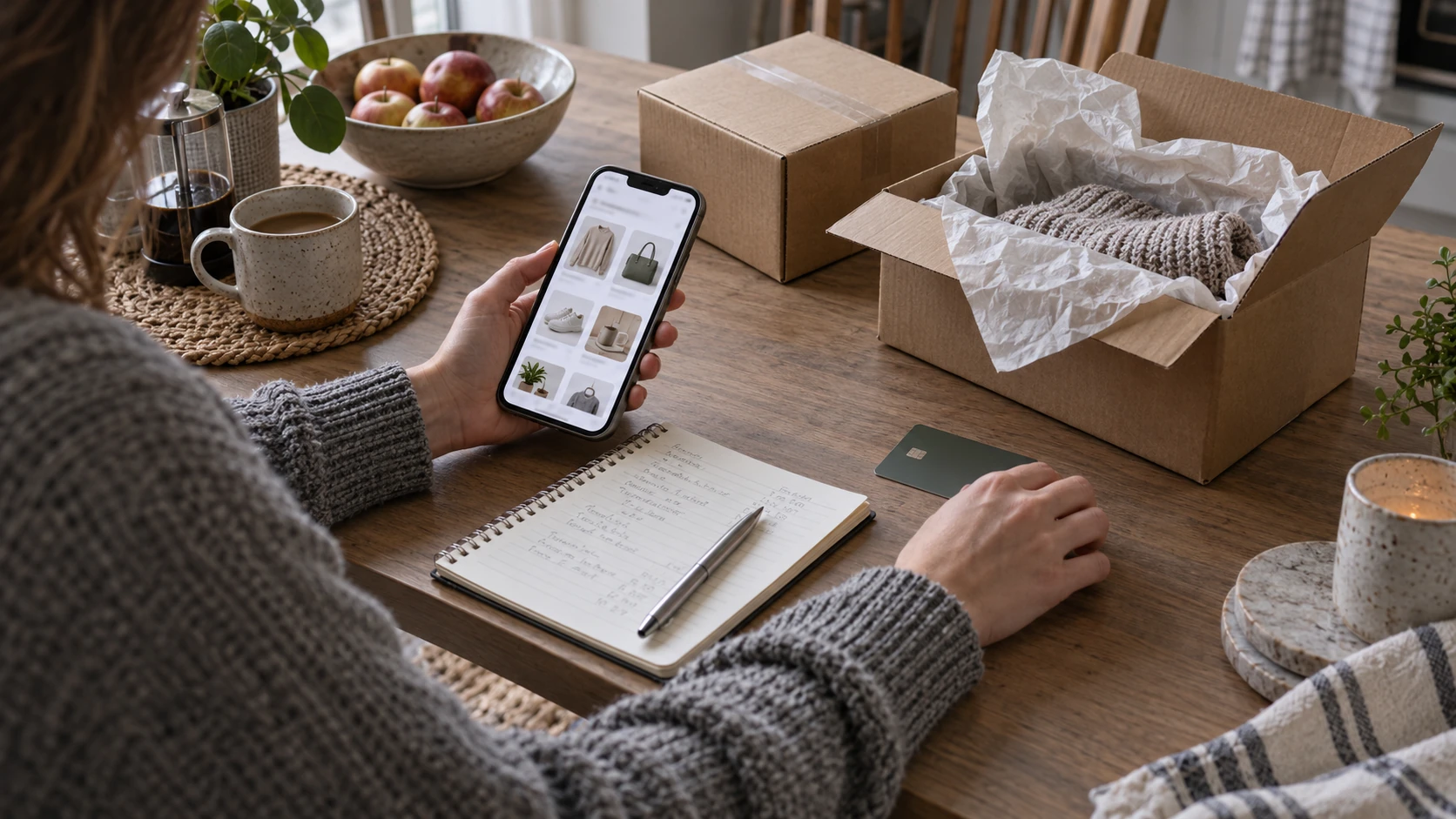
ADHD and impulse spending can be a frustrating combination. You know how much money you've got, you know what's coming out of your account, and you know there are things you should probably be saving for.
Then something catches your attention.
You don't just want it. You start thinking about it constantly, researching it, comparing prices and finding reasons why buying it actually makes sense.
Before long, something you hadn't even thought about yesterday suddenly feels like a priority.
The buzz of buying
For some people with ADHD, the excitement starts long before anything is purchased.
You see something interesting and immediately start looking into it.
Maybe it's a new phone, something for the house, a tool, a hobby or some random thing you've decided you absolutely need.
You start watching videos, reading reviews and comparing different versions.
The more you research, the more interested you become.
And the more interested you become, the harder it can be to leave it alone.
Why the anticipation can feel better than the purchase
The brain's reward system plays a role in motivation and anticipation.
Dopamine is involved in how we respond to potential rewards, and ADHD is associated with differences in reward processing and impulse control.
That doesn't mean every impulsive purchase is caused by dopamine. But the excitement of something new can make waiting or thinking about longer-term consequences more difficult.
Sometimes, the anticipation is more enjoyable than actually owning the item.
When wanting becomes needing
This is where things can start getting expensive.
You've found something you want, but instead of simply accepting that you want it, you start building a case for buying it.
You convince yourself it will make life easier.
Maybe you'll be more organised.
Maybe you'll use it every day.
Maybe it's worth paying extra for the better model.
And sometimes you're absolutely right.
But other times, you're just finding perfectly reasonable explanations for an impulsive decision.
The problem with making decisions in the moment
When you're excited about something, the immediate reward can feel much more important than what happens later.
You might know there's a bill coming out next week.
You might know you're supposed to be saving.
But neither feels quite as important as the thing you're interested in right now.
This is one reason delaying purchases can be useful.
It gives you the opportunity to make the same decision without the initial excitement influencing it quite so heavily.
Why budgeting feels hard
Impulse spending is only one part of the problem.
ADHD can also affect planning, organisation, working memory and time management.
All of these matter when you're trying to manage money.
You might forget a payment deadline, underestimate how much you've spent or put off checking your accounts because something else has your attention.
Knowing what to do isn't the same as doing it
Most people understand the basics of managing money.
Spend less than you earn.
Pay your bills.
Save something when possible.
Avoid buying things you can't afford.
The difficulty isn't necessarily understanding those rules.
It's following them consistently, especially when your attention and priorities are constantly changing.
Why organisation falls apart
You decide you're going to get your finances sorted.
You download a budgeting app, create categories, set spending limits and work out exactly where your money goes.
For the first few days, you're checking everything.
Then you forget.
A week passes, and you haven't updated anything.
Eventually, the system you spent hours creating becomes another thing you no longer use.
This doesn't mean budgeting tools don't work for people with ADHD.
It means the system needs to be simple enough to maintain when the initial interest disappears.
Managing impulse spending
You don't necessarily need a complicated budgeting system.
Sometimes a few small changes can make a bigger difference than creating an entire financial plan.
1. Don't buy something the moment you want it
Give yourself 24 to 48 hours before making non-essential purchases.
If you still want the item afterwards, you can decide whether it's worth buying.
The point isn't to stop yourself buying things.
It's to separate a genuine decision from an immediate impulse.
2. Keep essential money separate
Having a separate account for bills and essential spending can make it easier to see what's actually available.
If your rent, bills and other commitments are already accounted for, there's less risk of accidentally spending money you need later.
3. Make payments automatic
Direct Debits and standing orders can reduce the number of things you have to remember.
Where possible, arrange regular payments around your payday and keep enough money in the account to cover them.
4. Avoid making budgeting another complicated project
You don't need twenty different spending categories if you're never going to update them.
Start with what comes in, what must go out and what is left.
A simple system you regularly use is better than an elaborate one you abandon.
Know your spending patterns
Not every person with ADHD spends money impulsively.
Some are extremely careful with money. Others avoid spending because they're worried about making the wrong decision.
But if impulsive spending is something you recognise, it's worth looking at when it happens.
Do you buy things when you're bored?
Do you spend more when you're stressed?
Do you become obsessed with researching a particular product?
Do you lose interest in purchases shortly after receiving them?
Recognising the pattern can help you understand what drives your decisions.
Letting the want go
One of the hardest parts of impulsive spending can be getting something out of your head once you've decided you want it.
The more you look at it, the more reasons you find to buy it.
And the more you think about buying it, the more important it starts to feel.
My approach would be to give yourself more time to look at what you want and try to work out why you want it.
Are you genuinely going to use it?
Will it improve something in your life?
Is it worth the money?
Or are you more interested in the excitement of getting something new?
There's nothing wrong with buying things you enjoy.
The important part is being able to recognise when you're making a decision because you actually want something, rather than because you want the immediate feeling that comes with buying it.
Sometimes, leaving something alone for a couple of days is enough to realise you didn't really want it that much in the first place.
This information is for general education and is not personalised medical advice. Treatment and prescribing decisions belong to qualified healthcare professionals.