Still on the outside
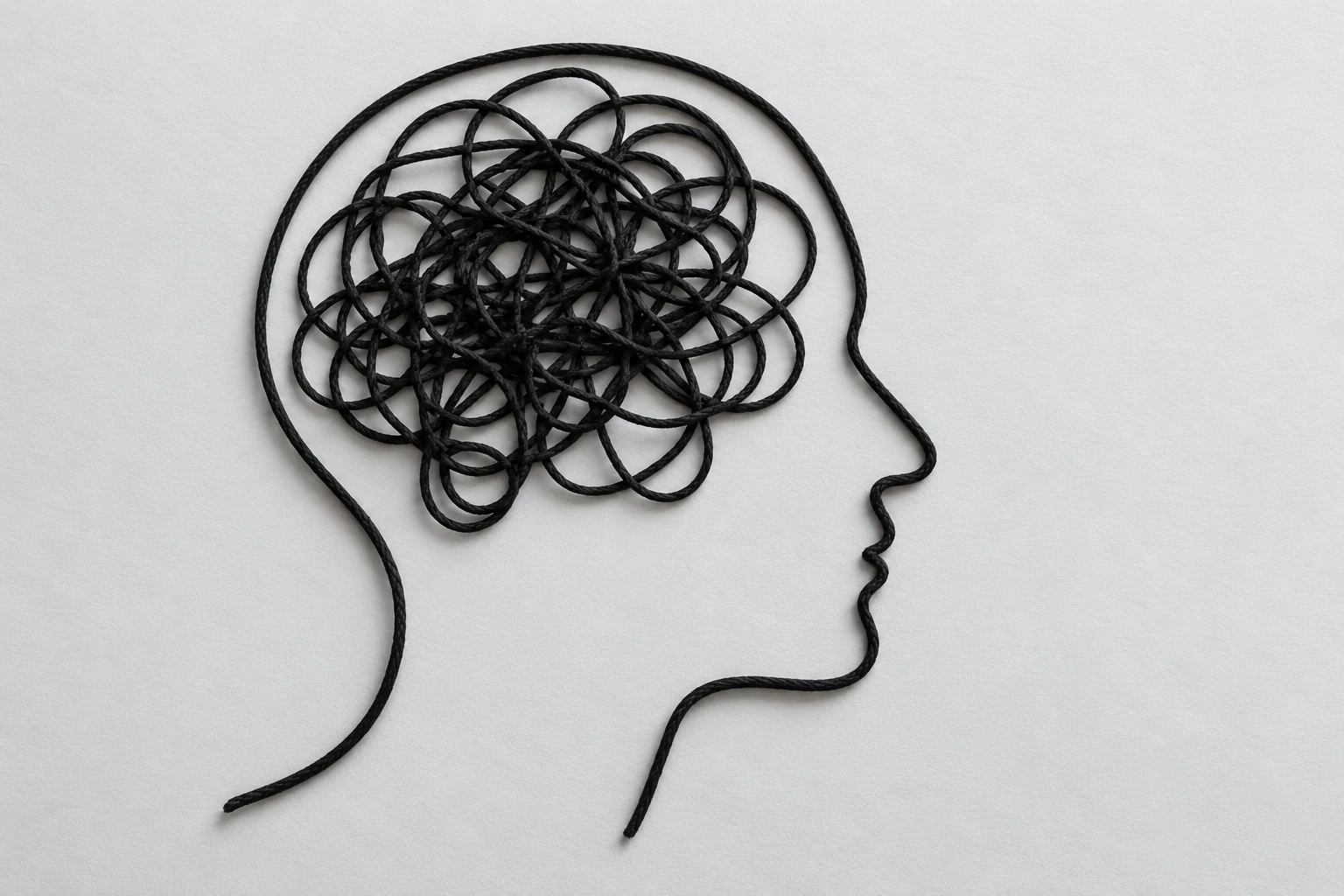
ADHD and mental restlessness can be hard to explain, because nobody can see it. You're sat in a meeting, looking like you're listening. Inside, you're thinking about the email you haven't sent, a song from 2004, whether you locked the car and what to have for tea, all within a minute. Hyperactivity in adults often looks less like running around and more like this: a head that won't stop.
What it feels like
People describe it in different ways: a radio that's always on, too many tabs open, or an engine idling too fast. Sitting through a long film, a slow conversation or a quiet evening can feel strangely uncomfortable. You might jiggle your leg, pick at your nails or reach for your phone without deciding to. It can be tiring, because there's never really a moment where your mind is just resting.
What research shows
The NHS page on ADHD in adults lists having a lot of energy or feeling restless among the signs of hyperactivity. Researchers at King's College London developed a questionnaire called the Mind Excessively Wandering Scale and found adults with ADHD reported much more mind wandering than adults without it. That extra mind wandering was linked to everyday problems over and above the usual ADHD symptoms.
The same team has suggested that constant, jumpy mind wandering might sit close to the centre of ADHD, though that idea is still being tested. It isn't only an ADHD thing either. Anxiety and low mood can also bring racing thoughts, which is one reason the NHS says a GP may look at other conditions such as anxiety when you ask about ADHD.
Why fidgeting happens
A small 2015 study of boys aged eight to twelve found that those with ADHD did better on a working memory task when they moved more, while boys without ADHD did slightly worse. The improvement didn't bring them up to the same level, and it was a small study in children, so it can't be applied straight to adults. It does suggest that, for some people, fidgeting may be doing a job rather than just being a distraction.
Doodling is less clear. A 2024 study found that doodling during a long lecture didn't reduce boredom or mind wandering and didn't help people remember more. The people who took notes did best on all of those. That study wasn't about ADHD, but it's a useful reminder that some popular focus tricks have less evidence behind them than you might think.
Giving it somewhere
You probably can't switch the noise off, but you can give it something to do, so it gets in the way less. These are practical ideas people with ADHD often find useful, not treatments, and not all of them will fit your day. Try one or two in the situations where restlessness bothers you most, like meetings, long drives or quiet evenings, and keep what helps.
Give your hands a quiet job
Keep something small in your pocket that you can fiddle with silently, like a smooth stone, a bit of Blu Tack or a ring you can turn. Under the table, nobody notices. It gives the restless energy an outlet that doesn't involve your phone or tapping a pen loudly. If you work from home, a wobble cushion or a chair that lets you rock slightly can do the same job.
Take notes, not doodles
In meetings, lectures or long phone calls, write notes as you go, even if nobody will ever read them. It gives your head an active job that's linked to what's being said, which seems to help attention more than doodling does. Short phrases and arrows are enough. If a random thought pops up, jot it in the margin and go back to the notes.
Move on purpose
Rather than fighting the urge to move, plan for it. Take phone calls standing up or walking round, choose an aisle seat at the cinema so you can stretch, and offer to fetch the coffees in a long meeting. If you're working on something hard, try pacing while you think it through. Using the movement deliberately often feels better than spending your energy trying to sit perfectly still.
Add a second channel
Some people find a quiet evening easier when their head has two things to do at once. Listening to a podcast while you wash up, doing a jigsaw while watching TV or knitting during a film can stop your mind wandering off on its own. Keep the second thing simple and hands-only, so it soaks up the spare attention rather than competing with what you're actually trying to follow.
Set up a thought dump
When the same thoughts keep coming round, write them down rather than trying to push them away. Keep one note on your phone or a pad by the sofa, and when something loops, like "ring the bank", write it down and tell yourself it's handled for now. A lot of the noise is your brain trying not to forget things, and putting them somewhere safe can quieten it.
When to get support
If mental restlessness is wearing you out, stopping you relaxing or affecting your sleep, work or relationships, speak to a GP. The NHS advises seeing a GP if ADHD symptoms are affecting your studies, work or relationships. Racing thoughts can also come from anxiety, low mood or other conditions, so it's worth getting it looked at properly. If you're already diagnosed and it's got worse, talk to your GP or ADHD team.
This information is for general education and is not personalised medical advice. Treatment and prescribing decisions belong to qualified healthcare professionals.